Privacy & Compliance · Study deck

Two Sides of Mobile Privacy

A commuter opens a journey app while the phone scans nearby radios and asks a cloud service for arrivals.

Privacy Priya is your guide for this deck.

mobile
iotclass.org

After studying this chapter

Learning objectives

You will be able to:

  • review mobile data collection, leakage, location, and sensing together across two exposure surfaces
  • check an app's stated declarations against what its traffic actually does
  • Explain: Some clues leave because an app is allowed to collect them.
  • Explain: Strong permission hygiene means little if an embedded component leaks data anyway, and careful app controls do nothing about passive sensing in the environment.
iotclass.org

Major section

What Leaves the Phone and What the Air Reveals
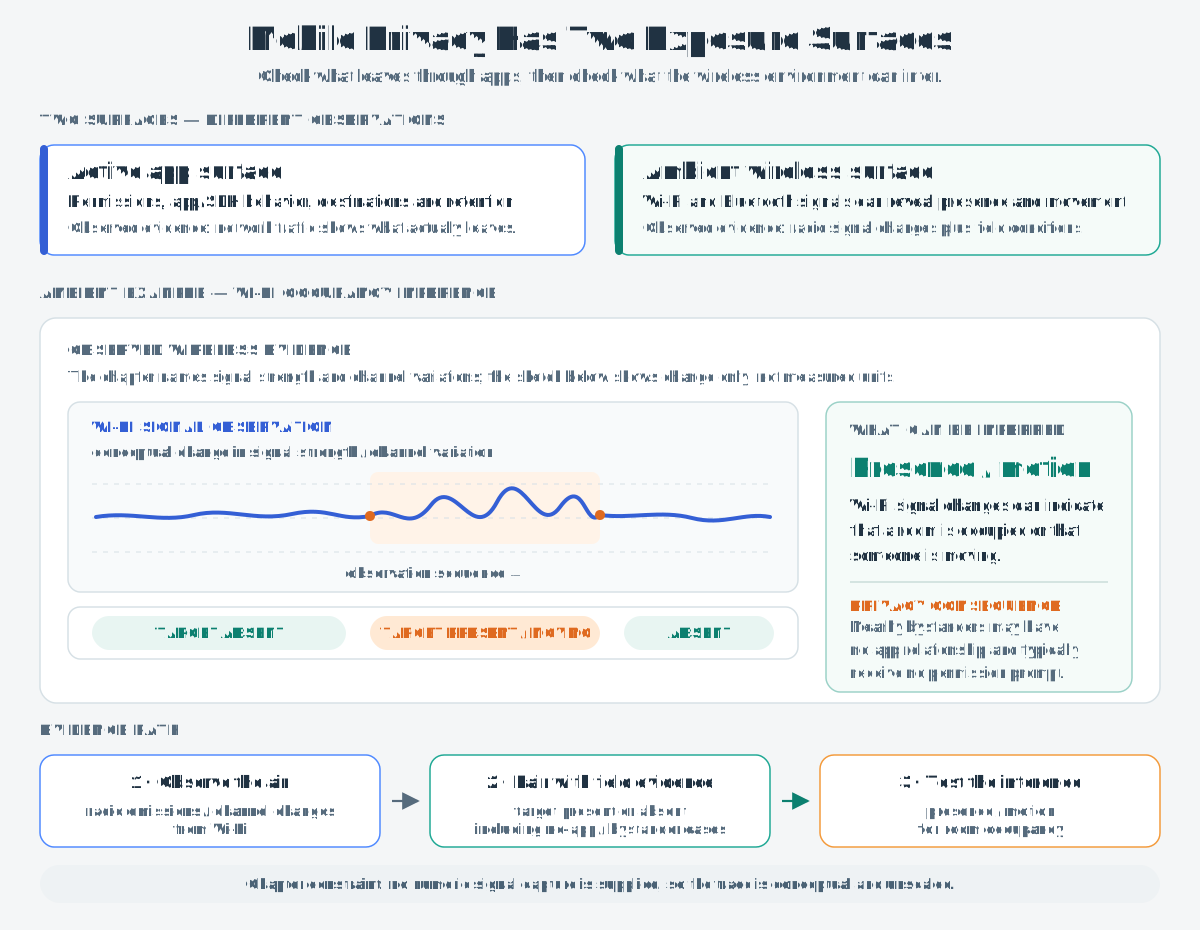
Some clues leave because an app is allowed to collect them.

  • It helps to see two distinct surfaces.
  • Mobile privacy is the habit of checking both paths before trusting the design.
Two-surface mobile privacy diagram compares data leaving through app permissions, SDK behavior, destinations and retention with ambient Wi-Fi or Bluetooth signals revealing presence and movement. A conceptual Wi-Fi occupancy sequence contrasts target absent with present or moving, and an evidence path includes bystanders without an app relationship.
iotclass.org

Major section

Review Collection, Leakage, Location, and Sensing Together
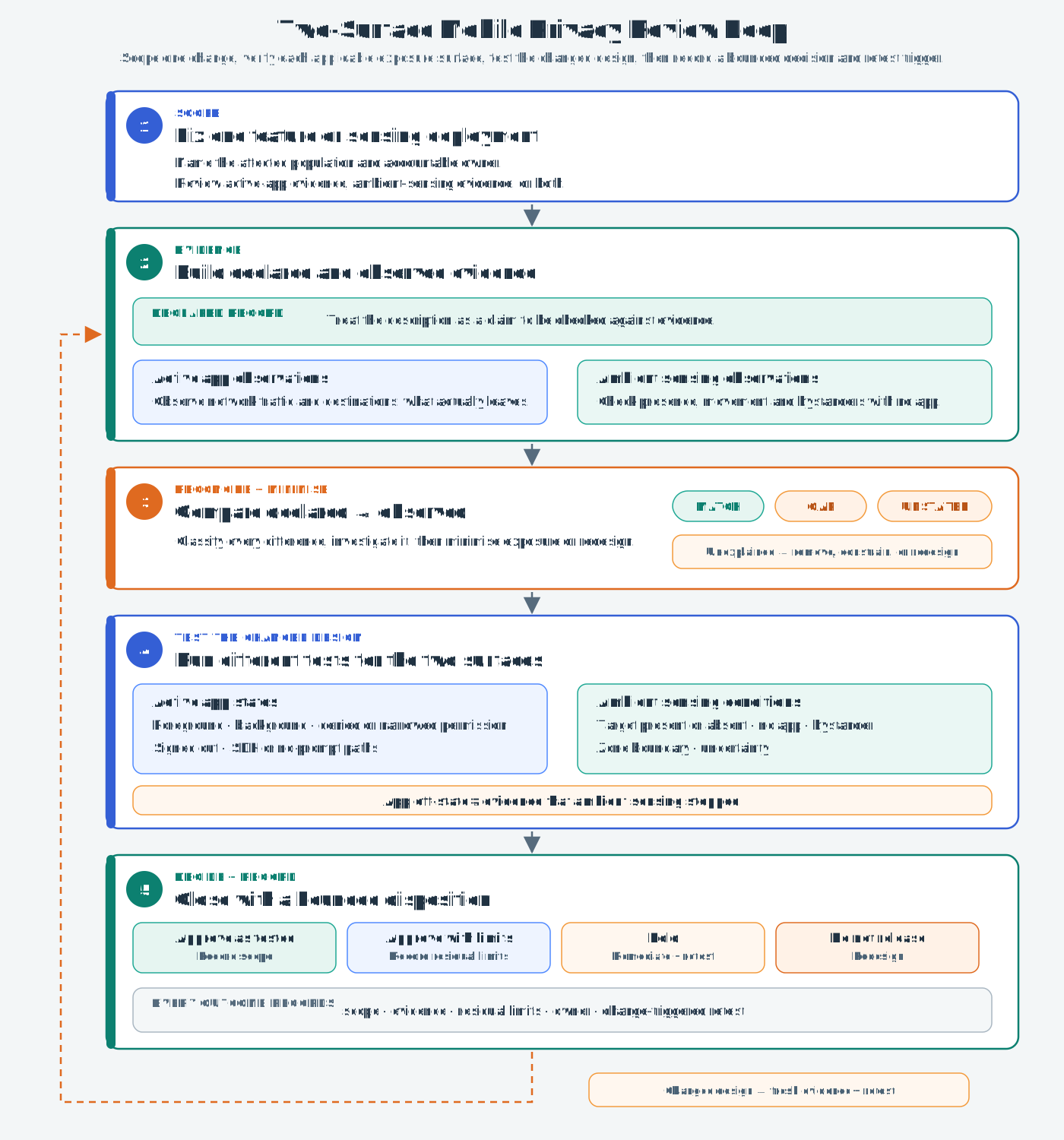
Strong permission hygiene means little if an embedded component leaks data anyway, and careful app controls do nothing about passive sensing in the environment.

  • Reconcile each match, gap, or unstated behavior, then minimize or redesign and run the surface-specific tests.
  • The decision gate permits approval only with recorded limits and evidence; otherwise it holds or rejects release.
Mobile privacy review fixes scope and owner, compares declared records with active-app and ambient observations, then tests changed states. A decision gate allows approval, limited approval, hold or redesign. The closure record keeps evidence, limits, owner and retest triggers for every disposition.
iotclass.org

Major section

Check Declarations Against What Actually Happens

The deeper layer explains why mobile privacy resists trust-by-description.

  • The gap between what is declared and what actually happens is where most surprises live, and passive sensing introduces a person who never agreed to anything.
  • Granting a permission permits access, but it says nothing about how responsibly the data is used or where it ends up.
  • Because declared behavior is a claim, the network traffic is the closest thing to ground truth about what leaves a device.
iotclass.org

Major section

Read Both Privacy Surfaces on a Train

Air-side observations need their own mobile privacy retention limit.

  • Nearby beacons and repeated radio observations may still support coarse presence or movement inference.
  • A persistent token plus a distinctive route can reconnect the privacy record to one commuter.
Two-surface mobile privacy diagram compares data leaving through app permissions, SDK behavior, destinations and retention with ambient Wi-Fi or Bluetooth signals revealing presence and movement. A conceptual Wi-Fi occupancy sequence contrasts target absent with present or moving, and an evidence path includes bystanders without an app relationship.
iotclass.org

Deck summary

Key takeaways

Some clues leave because an app is allowed to collect them.

  • Strong permission hygiene means little if an embedded component leaks data anyway, and careful app controls do nothing about passive sensing in the environment.
  • The deeper layer explains why mobile privacy resists trust-by-description.
  • Air-side observations need their own mobile privacy retention limit.
iotclass.org

Retrieval practice

Recall check 1 of 3

Privacy Priya says: answer from memory, then check your reasoning.

Q1What does granting a mobile app a permission most directly mean for privacy?

AIt authorizes local use of the data, while cloud use needs a separate collection permission
BIt limits collection to times when the user has the app visible on the screen
CIt records a user preference, while the app's published policy determines its actual access
DIt opens a path for that data category to be collected or sent off device
Show answer

Answer: D A permission is a data tap; it opens a path for that category of data to be collected and potentially sent off the device.

iotclass.org

Retrieval practice

Recall check 2 of 3

Privacy Priya says: answer from memory, then check your reasoning.

Q2A simple flashlight app requests precise location, contacts, and always-on access. What is the best first response in a mobile privacy review?

AGrant all requested permissions, since the app would not ask without needing them
BAssume it is safe because it is a small, simple utility
COnly read the app's privacy description and skip checking the traffic
DDeny unrelated permissions and inspect traffic for bundled-component leaks
Show answer

Answer: D A flashlight needs none of those, so deny the unrelated permissions and verify with traffic inspection that nothing leaks regardless.

iotclass.org

Retrieval practice

Recall check 3 of 3

Privacy Priya says: answer from memory, then check your reasoning.

Q3An app's description says it does not collect location, but traffic inspection shows an embedded analytics component sending precise location to a third party. What does this illustrate?

AThe app's own code is exempt when an embedded component collects data.
BA description update alone leaves the unnecessary third-party flow in place.
CDeclared collection can differ from observed SDK network behavior.
DTraffic captures are less trustworthy than a written app description.
Show answer

Answer: C The traffic reveals what the description hid.

iotclass.org

Print reference

Answers

Answer key.

  1. D · A permission is a data tap; it opens a path for that category of data to be collected and potentially sent off the device.
  2. D · A flashlight needs none of those, so deny the unrelated permissions and verify with traffic inspection that nothing leaks regardless.
  3. C · The traffic reveals what the description hid.
iotclass.org